


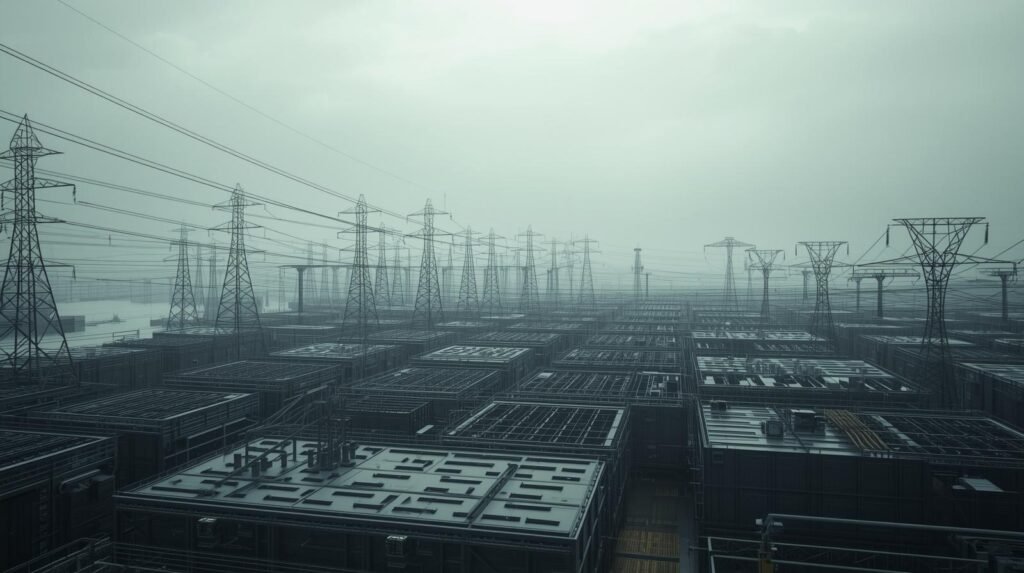
A senior Google executive has raised a major concern about one of the biggest challenges facing the artificial intelligence (AI) industry in the United States in 2026: the limitations and delays of the country’s power grid infrastructure. These challenges are slowing the expansion of data centers — the backbone of AI development — and could affect America’s ability to compete globally in the race for technological dominance.
AI adoption is accelerating rapidly, but without a more resilient energy infrastructure, the industry may struggle to grow at the pace needed to match global competitors.
What Is the Power Grid Problem?
According to Google’s Marsden Hanna, head of sustainability and climate policy, the U.S. electrical transmission system has become a bottleneck for AI infrastructure expansion. Hanna explained that connecting new data centers to the grid can sometimes take up to 12 years due to regulatory hurdles and infrastructure constraints — a challenge that China reportedly does not face to the same degree.
This means that even if tech companies want to build more facilities to power AI computation, they may be hampered by the slow pace of grid connections and electrical approvals.
Why It Matters for AI Growth
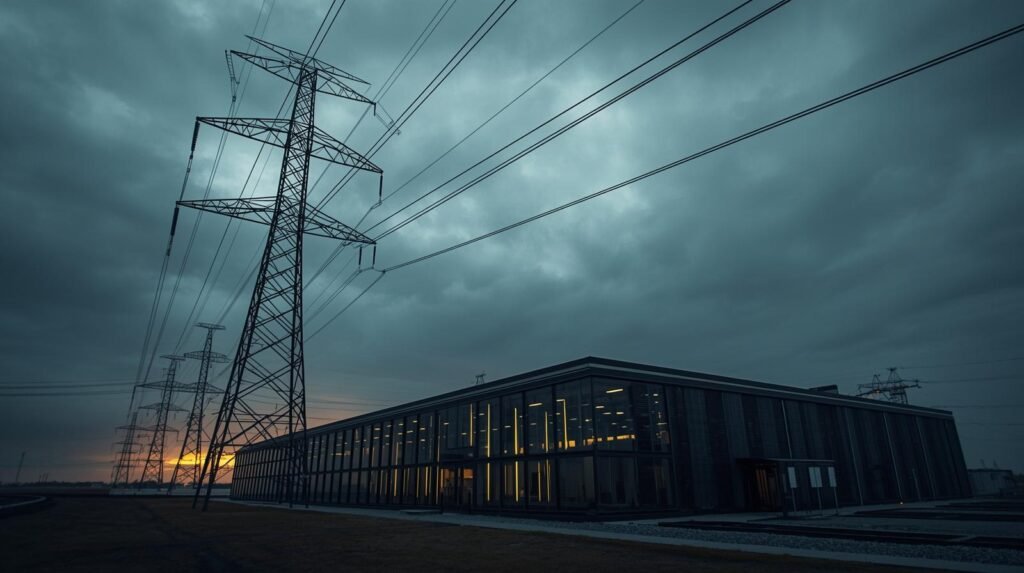
The demand for electricity is skyrocketing due to AI. Analysts expect global electricity demand to rise by about 30% by 2035, much of it driven by the expansion of AI-powered data centers. Their share of total power consumption is expected to grow from roughly 1.5% today to over 3.5% in the coming decade.
This surge poses a dual challenge:
• Infrastructure readiness: The current grid is not ready for the rapid increase in demand.
• Global competitiveness: Countries that can build data centers faster have an edge in AI development.
Without faster approvals and capacity to transmit power, U.S. AI companies may struggle to scale computing infrastructure competitively.
Google’s “Co-Location” Strategy
To address the challenge, Google is experimenting with a strategy called co-location — building data centers directly beside existing power plants. This approach would allow the company to bypass major grid connection delays by tapping into power sources more quickly, while still aiming for eventual full grid integration.
According to Hanna, this could be a short-term fix to sustain growth until the power grid can be upgraded to support faster, broader connections.
Calls for U.S. Energy Investment
Experts beyond Google are also sounding the alarm. Investor Michael Burry has urged U.S. political leaders to accelerate investment in nuclear power and grid expansion to keep up with rising energy needs driven by AI and other industries.
These calls emphasize that without substantial infrastructure investment, the U.S. risks losing its competitive edge — particularly to countries with more adaptable power systems and faster deployment capabilities.
What This Means for the Future of AI in the USA
As AI becomes more central to economic growth and national competitiveness:
• Reliable and scalable power infrastructure will be critical.
• Policy and regulatory reforms may be needed to speed grid upgrades.
• Investment in energy generation and transmission could determine which nations lead in AI research and deployment.
Industry leaders warn that without a stronger energy backbone, AI innovation could stall even if computing and talent continue to grow rapidly.
Conclusion
The warning from a top Google executive highlights a crucial but often overlooked issue: power infrastructure limitations may be one of the biggest barriers to AI growth in the United States. As AI technology continues to advance, ensuring that the nation’s electrical grid can support this expansion will be essential to maintaining competitiveness and sustaining innovation.
Upgrading infrastructure, investing in new energy sources, and streamlining approvals could be key to unlocking the next chapter of AI development in America.