


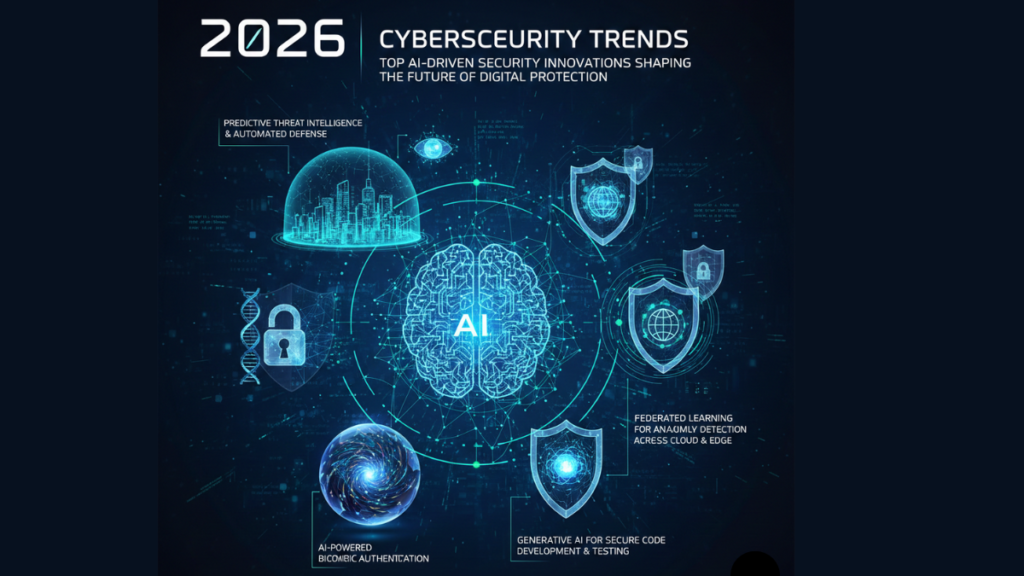
How Artificial Intelligence, Zero Trust, and Automation Are Redefining Cyber Defense in 2026
As we move deeper into the digital age, cybersecurity is no longer just an IT issue—it’s a business, government, and personal priority. In 2026, cyber threats are becoming more advanced, more automated, and more intelligent. From AI-powered phishing to cloud-based attacks, the digital world is facing a new era of risk.
Let’s explore the most important Cybersecurity Trends of 2026 and how they are reshaping digital protection.
Why Cybersecurity Matters More Than Ever in 2026
Data is the new currency. From financial details to medical records and personal identities, everything is digital—and everything is a target.
In 2026:
-
Ransomware attacks are more targeted and destructive
-
AI-generated scams look extremely real
-
Cloud, IoT, and remote work expand the attack surface
Cybersecurity is no longer optional. It is essential for survival.
Top Cybersecurity Trends in 2026
1. AI vs AI: Smarter Attacks, Smarter Defense
Hackers are now using Artificial Intelligence to automate phishing, malware creation, and social engineering. At the same time, security teams use AI to detect threats in real time.
👉 The result: A full-scale AI vs AI cybersecurity battle.
2. Zero Trust Security Becomes the Global Standard
The old idea of “trusting internal users” is gone.
Zero Trust means:
-
No user or device is trusted by default
-
Continuous identity verification is required
-
Micro-segmentation limits breach damage
In 2026, Zero Trust is the foundation of cybersecurity strategy.
3. Cloud Security Takes Center Stage
As more companies shift to hybrid and multi-cloud environments:
-
Misconfigured cloud systems become a top risk
-
Cloud-native security tools rise
-
Shared responsibility becomes critical
Cloud security is now a core part of every cybersecurity plan.
4. Cybersecurity Automation & SOAR Platforms
Security teams face thousands of alerts daily. In 2026:
-
Automated incident response is essential
-
SOAR (Security Orchestration, Automation & Response) tools manage threats
-
Humans focus on strategy instead of manual fixes
Automation = Faster response + Less damage.
5. Identity Is the New Security Perimeter
Passwords alone are no longer enough.
In 2026:
-
Multi-Factor Authentication (MFA) is mandatory
-
Biometrics replace passwords
-
Behavioral analytics detect unusual activity
Your digital identity is now your first line of defense.
Cybersecurity Trends 2026 – Quick Overview Table
| Trend Area | What’s Changing in 2026 | Impact on Security |
|---|---|---|
| AI in Cybersecurity | AI used by attackers & defenders | Faster detection & smarter attacks |
| Zero Trust | No implicit trust for any user/device | Limits breach damage |
| Cloud Security | Cloud-native protection tools rise | Safer hybrid & multi-cloud setups |
| Automation (SOAR) | Automated incident response systems | Quicker threat handling |
| Identity Security | MFA, biometrics, behavior-based access | Stronger access control |
| IoT & Edge Security | Billions of connected devices | Larger attack surface |
What This Means for Businesses in the USA
For organizations in 2026:
✔️ Cybersecurity becomes a board-level priority
✔️ Investment in AI-based security grows
✔️ Compliance and privacy regulations tighten
✔️ Cyber resilience is as important as prevention
Security is no longer about if you get attacked—it’s about how fast you recover.
What This Means for Individuals
For everyday users:
-
Use a password manager
-
Enable MFA everywhere
-
Watch out for AI-generated scams
-
Keep your software updated
Your personal cyber hygiene matters more than ever.
The Future of Cybersecurity
In 2026, cybersecurity is not just about blocking threats—it’s about building digital trust. As AI, cloud, and automation evolve, security must evolve faster.
Those who adapt will survive.
Those who ignore it—won’t.
Conclusion
Cybersecurity Trends 2026 show one clear reality: security is becoming intelligent, automated, and identity-driven. From AI-powered defense to Zero Trust and cloud protection, the future of cybersecurity is proactive—not reactive.
The time to upgrade your security mindset is now.
👉 How are you preparing for cybersecurity in 2026?
Share your thoughts in the comments!