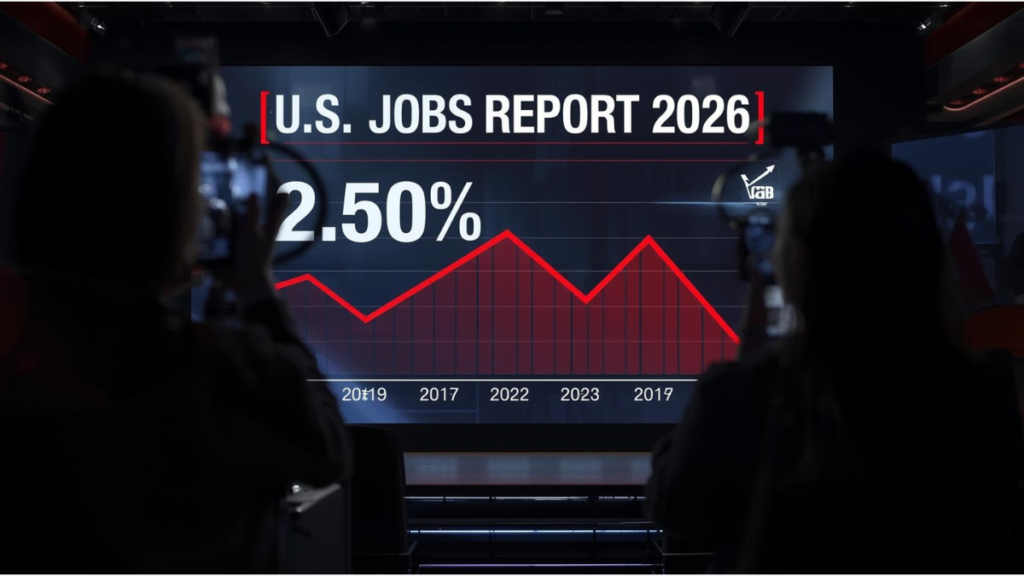
The U.S. job market is showing signs of strain and the latest data suggest education alone may no longer guarantee college advantage.
According to a recent analysis from Investopedia, unemployment among U.S. workers with college degrees climbed to 2.8% in late 2025, narrowing the traditional advantage degree holders have long enjoyed and rising to 5.6% for college graduates aged 22–27.
At the same time, broader labor data show weak hiring and declining job openings, while layoffs remain elevated creating mixed signals in an economy where GDP growth persists, but employers hesitate to expand payrolls.
Amid this uneasy landscape, artificial intelligence is increasingly referenced — not just in headlines but in hiring data.
Why AI Skills Are Becoming a Job Market Lifeline
While job growth overall remains modest, roles that mention AI in job postings are bucking the trend.
Data from the Hiring Lab shows that AI-related job postings roles requiring AI terminology or skills are growing even as overall hiring remains weak. Nearly 45% of data & analytics listings now include AI terms, far higher than in other fields.
This pattern suggests one clear takeaway: AI skills are worth much more today than they were a few years ago.
More Than Coding — The AI Skills Employers Really Want
Contrary to common belief, the most in-demand AI skills aren’t exclusively technical coding jobs.
According to reporting from Fast Company, the career area with the most rapid hiring growth isn’t Python programming — it’s AI video generation and editing, part of the growing creative and design automation space. Hiring for these roles surged more than 329% year-over-year, even amid broad hiring weakness.
This reflects a broader shift in how employers value AI:
-
AI tool literacy and creative application are increasingly prized.
-
Human-AI collaboration skills beat pure automation for many roles.
-
Even entry-level jobs are beginning to require AI familiarity.
The consensus among labor analysts is that AI fluency is now a job accessibility signal in hiring, not just a bonus.
Why This Matters for Job Seekers (and Parents of Job Seekers)
As traditional credentials like college degrees lose some of their edge, workplaces are placing higher weight on demonstrable practical skills — especially those involving AI workflows, automation tools, and creative applications.
Key insights from research show that:
-
Recruiters see AI skills as a positive hiring signal that can offset disadvantages like age or non-traditional education. Evidence from hiring experiments suggests candidates with AI proficiency get 8–15% more interview invitations than those without.
-
Roles emphasizing AI tool competency often come with higher wage premiums and benefits than non-AI roles.
In other words, workers don’t have to become machine learning engineers — but they do need to embrace AI fluency to stay competitive.
AI Isn’t Replacing Jobs — It’s Reshaping Them
Despite fears and headlines, most economists now agree that AI is not simply eliminating jobs across the board.
Instead, it is reshaping what skills are valuable.
For example:
-
Service, creative, and design roles that integrate AI tools are expanding.
-
Employers are increasingly tailoring job descriptions to include AI competencies.
-
Entry-level candidates who demonstrate AI tool mastery stand out even in traditionally competitive fields.
Even the International Monetary Fund (IMF) notes that AI exposure does not uniformly depress employment — but workers need to adapt and re-skill to benefit.
practical Ways Americans Can Train for AI-Driven Roles
Here are proven strategies Americans can use right now to improve their employability in a market where AI matters:
🧠 1. Learn AI Tool Literacy
Focus not just on coding, but on practical AI tools used in business workflows — from generative systems to automation platforms.
💼 2. Build a Portfolio With AI Projects
Create real examples — like AI-generated content, data visualizations, or video — that demonstrate capability over theory.
🎓 3. Use Accessible Training Programs
Programs like IBM SkillsBuild and other online pathways help bridge the AI skills gap without expensive degrees.
📈 4. Highlight AI Skills on Profiles & Resumes
AI mentions now help candidates get noticed — LinkedIn data shows a sharp concentration of AI skills among certain job functions, and listing these on resumes boosts visibility.
FAQ
Is AI taking jobs away?
Not in a uniform way. AI is reshaping job requirements and emphasizing new skills rather than vanished jobs entirely.
What skills matter most in 2026?
Practical AI fluency (tool use, creative automation, data analysis) and soft skills that complement AI are trending.
Do I need a degree to benefit?
Not necessarily. Demonstrated skills and AI competency often matter more than degrees alone.
Conclusion
The labor market landscape in 2026 feels confusing: weak hiring, layoffs, and a narrowing edge for traditional credentials. But the data also point to a clear opportunity: workers who embrace AI skills — especially practical, real-world competencies — are much better positioned to navigate the shifting job terrain.
AI isn’t just reshaping work — it’s reshaping what it takes to get hired.